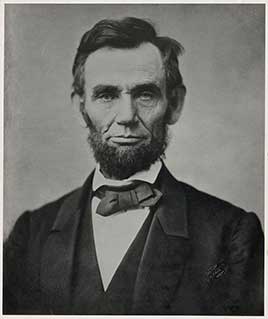
Abraham Lincoln
Elected in 1860 on a platform against the spread of slavery; eleven Southern states seceded. He led the Union through the Civil War, issued the Emancipation Proclamation, pushed the 13th Amendment abolishing slavery through Congress, and signed the first federal income tax, paper money ('greenbacks'), the Homestead Act and the transcontinental railroad. He also suspended habeas corpus and allowed the military arrest of thousands of civilians. He was assassinated days after the war ended.
The economy, first day to last
Shaded areas show the years in office, with a few years before and after for comparison. Budget years ran July to June until 1976 (now October to September), so each year's figures cover parts of two calendar years.
National debt
June 30, 1860 (end of fiscal 1860): $64.84 million → June 30, 1864 (end of fiscal 1864): $1.82 billion
Daily debt figures don't exist before 1993, so Lincoln's numbers use the fiscal years closest to his term, the same rule as every other page. The Civil War took the debt from $65 million to $2.68 billion by June 30, 1865, eleven weeks after his death.
Debt compared with the economy
Debt as a share of GDP. Above 100% means the debt is bigger than a year of everything the country produces.
Deficits and surpluses
Money borrowed each budget year (below the line) or paid down (above). The White House budget office's yearly figures begin in 1901.
Unemployment
No national estimates before 1890. Economist Stanley Lebergott's yearly estimates, the earliest national series, begin in 1890
Inflation
How much prices rose each year (consumer price index).
Cost of living
What everyday prices and paychecks did while in office.
Prices use the consumer price index (MeasuringWorth). The minimum wage is the federal rate set by Congress.
Executive orders
48 orders. Count from the American Presidency Project. His best-known acts, like the Emancipation Proclamation, were proclamations, not executive orders.
Orders signed each year
Yearly counts aren't reliable for this era. Orders were not numbered until 1907, when the State Department numbered the ones already in its files, and many orders were never numbered at all, so only the total is shown.
Source: American Presidency Project: executive orders (full list of every order).
Notable orders
A provisional court for LouisianaEO 1October 20, 1862
Set up a federal court in Union-occupied Louisiana. It is numbered 1 because the State Department later numbered orders starting from it.
Federal RegisterThe Emancipation ProclamationOrderJanuary 1, 1863
A proclamation, not an executive order: declared enslaved people in Confederate-held areas free and allowed Black men to join the Union army. It did not apply to border states that stayed in the Union.
Federal RegisterEvery executive order we have 119Search, filter by topic or year, and open any order's full text
Incomplete: orders before 1929 were not numbered or collected consistently. This archive has 119 of the roughly 48 orders counted for this president.
- OrderApril 25, 1861Executive Order
- OrderApril 27, 1861Executive Order
- OrderApril 30, 1861Executive Order
- OrderMay 7, 1861Executive Order
- OrderJune 20, 1861Executive Order
- OrderJuly 2, 1861Executive Order—Authorizing General Winfield Scott To Suspend the Writ of Habeas Corpus
- OrderJuly 31, 1861Executive Order
- OrderAugust 7, 1861Executive Order
- OrderOctober 3, 1861Executive Order—Uintah Valley Reserve
- OrderOctober 4, 1861Executive Order
- OrderOctober 14, 1861Executive Order—Suspension of the Writ of Habeas Corpus
- OrderNovember 1, 1861Executive Order—General Orders No. 94: Retiring General Winfield Scott and Appointing General George B. McClellan His Successor
- OrderNovember 5, 1861Executive Order—Approving the Plan of the Governor of Missouri
- OrderNovember 7, 1861Executive Order
- OrderNovember 16, 1861Executive Order
- OrderNovember 27, 1861Executive Order
- OrderDecember 2, 1861Executive Order—Authorizing General H.W. Halleck To Suspend the Writ of Habeas Corpus
- OrderDecember 30, 1861Executive Order
- OrderJanuary 22, 1862Executive Order
- OrderJanuary 27, 1862Executive Order—General War Order No. 1
- OrderJanuary 31, 1862Executive Order—Special War Order No. 1
- OrderFebruary 11, 1862Executive Order
- OrderFebruary 13, 1862Executive Order
- OrderFebruary 14, 1862Executive Order No. 1—Relating to Political Prisoners
- OrderFebruary 18, 1862Executive Order
- OrderFebruary 18, 1862Executive Order
- OrderFebruary 18, 1862Executive Order
- OrderFebruary 18, 1862Executive Order
- OrderFebruary 25, 1862Executive Order—Taking into Military Possession all Telegraph Lines in the United States
- OrderFebruary 27, 1862Executive Order No. 2—State Prisoners
- OrderFebruary 28, 1862Executive Order—Commercial Intercourse
- OrderMarch 8, 1862Executive Order—President's General War Order No. 3
- OrderMarch 8, 1862Executive Order—President's General War Order No. 2
- OrderMarch 11, 1862Executive Order—President's Special War Order No. 3
- OrderMarch 13, 1862Executive Order
- OrderMarch 15, 1862Executive Order
- OrderApril 5, 1862Executive Order
- OrderMay 25, 1862Executive Order—Taking Military Possession of Railroads
- OrderMay 28, 1862Executive Order
- OrderMay 30, 1862Executive Order
- OrderJune 26, 1862Order Constituting the Army of Virginia
- OrderJune 30, 1862Executive Order—Call for Troops
- OrderJuly 1, 1862Executive Order
- OrderJuly 11, 1862Executive Order—Making Henry W. Halleck General-in-Chief
- OrderJuly 11, 1862Executive Order—Concerning the Southwest Branch of the Pacific Railroad
- OrderJuly 21, 1862Executive Order—In Regard to Behavior of Aliens
- OrderJuly 22, 1862Executive Order—Authorizing Employment of "Contrabands"
- OrderJuly 25, 1862Executive Order [on the death of Martin van Buren]
- OrderJuly 31, 1862Executive Order
- OrderAugust 4, 1862Executive Order
- OrderAugust 8, 1862Executive Order
- OrderAugust 14, 1862Executive Order
- OrderSeptember 2, 1862Executive Order
- OrderSeptember 3, 1862Order to General H.W. Halleck
- OrderOctober 20, 1862Executive Order—Establishing a Provisional Court in Louisiana
- OrderOctober 29, 1862Executive Order
- OrderNovember 5, 1862Executive Order—Relieving General G. B. McClellan and Making Other Changes
- OrderNovember 7, 1862Executive Order
- OrderNovember 12, 1862Executive Order—Concerning Blockade
- OrderNovember 13, 1862Executive Order—Concerning the Confiscation Act
- OrderNovember 15, 1862Executive Order—General Order Respecting the Observance of the Sabbath Day in the Army and Navy
- OrderNovember 21, 1862Executive Order—Prohibiting the Export of Arms and Munitions of War
- OrderDecember 22, 1862Executive Order
- OrderJanuary 4, 1863Executive Order
- OrderJanuary 8, 1863Executive Order
- OrderJanuary 21, 1863Executive Order
- OrderJanuary 25, 1863General Orders No. 20—Relieving General A.E. Burnside and Making Other Changes
- OrderMarch 31, 1863Executive Order—License of Commercial Intercourse
- OrderJune 22, 1863Executive Order
- OrderJuly 4, 1863Executive Order
- OrderJuly 9, 1863Executive Order
- OrderJuly 25, 1863Executive Order
- OrderJuly 30, 1863Executive Order—Retaliation
- OrderAugust 25, 1863Executive Order
- OrderAugust 31, 1863Executive Order
- OrderSeptember 4, 1863Executive Order—Concerning Commercial Regulations
- OrderSeptember 24, 1863Executive Order — Military Seizure of Railroads for General Hooker's Operations
- OrderNovember 10, 1863Executive Order—Export of Tobacco Purchased by Foreign Nations
- OrderDecember 7, 1863Executive Order
- OrderDecember 21, 1863Executive Order
- OrderJanuary 9, 1864Executive Order
- OrderJanuary 12, 1864Executive Order
- OrderJanuary 15, 1864Executive Order—Bosque Redondo Reserve
- OrderJanuary 26, 1864Executive Order—Approving Trade Regulations
- OrderFebruary 1, 1864Executive Order—Regarding the Colonization Experiment
- OrderFebruary 1, 1864Executive Order—Drafting 500,000 Men
- OrderFebruary 26, 1864Executive Order—Deserters Death Sentences Remitted
- OrderMarch 7, 1864Executive Order—Exportation of Tobacco Belonging to the French Government
- OrderMarch 7, 1864Executive Order
- OrderMarch 10, 1864Executive Order—Assigning U.S. Grant to the Command of the Armies of the United States
- OrderMarch 12, 1864Executive Order
- OrderMarch 14, 1864Executive Order—Calling for 200,000 Men
- OrderApril 2, 1864Executive Order
- OrderApril 16, 1864Executive Order—Little Traverse Reserve
- OrderApril 23, 1864Executive Order
- OrderMay 9, 1864Executive Order
- OrderMay 18, 1864Executive Order—Arrest and Imprisonment of Irresponsible Newspaper Reporters and Editors
- OrderJuly 18, 1864Executive Order
- OrderAugust 31, 1864Executive Order—Concerning Cotton
- OrderSeptember 3, 1864Executive Order—Tendering Thanks to Major-General William T. Sherman
- OrderSeptember 3, 1864Executive Order—Tendering Thanks to Admiral Farragut and Major-General Canby
- OrderSeptember 3, 1864Executive Order
- OrderSeptember 10, 1864Executive Order—Thanks to Hundred-Day Troops From Ohio
- OrderSeptember 24, 1864Executive Order—Concerning the Purchase of Products in Insurrectionary States
- OrderOctober 1, 1864Executive Order—Returning Thanks to the Volunteers for One Hundred Days From the States of Indiana, Illinois, Iowa, and Wisconsin
- OrderOctober 12, 1864Executive Order
- OrderNovember 14, 1864Executive Order
- OrderDecember 3, 1864Executive Order—Concerning the Steamer "Funayma Solace"
- OrderDecember 10, 1864Executive Order—Appointing Commissioners to Investigate the Military Division West of the Mississippi
- OrderDecember 17, 1864Executive Order
- OrderDecember 31, 1864Executive Order
- OrderJanuary 20, 1865Executive Order
- OrderFebruary 6, 1865Executive Order—Establishment of a Board to Make Corrections in the Draft
- OrderFebruary 13, 1865Executive Order
- OrderFebruary 21, 1865Executive Order
- OrderMarch 8, 1865Executive Order
- OrderMarch 14, 1865Executive Order—Ordering the Arrest and Designation as Prisoners of War All Persons Engaged in Intercourse or Trade with the Insurgents by Sea
- OrderMarch 27, 1865Executive Order—Ordering the Raising of the Flag and Other Commemorations at Fort Sumter
- OrderApril 4, 1865Executive Order
Source: Executive Orders Archive, compiled from the American Presidency Project and the Federal Register. Topics are the archive's automated tags; "Revoked" and similar labels come from the Federal Register's records.
Pardons and commutations
A pardon wipes out the punishment for a federal crime; a commutation shortens a sentence but leaves the conviction. The Justice Department's published counts begin in 1900. In December 1863 he offered a pardon by proclamation to most Confederates who swore loyalty to the Union.
Granted each year
The Justice Department's published clemency counts begin in fiscal 1900, so there are no reliable yearly totals for this presidency.
Source: U.S. Dept. of Justice, clemency statistics, which lists every recipient with the crime and sentence.
Notable grants: tap to see the crime
303 Dakota menCommutations1862-12
The crime: Killings of settlers during the U.S.–Dakota War in Minnesota (military commission, 1862)
Sentence: Death
Why it drew attention: Lincoln reviewed the trial records and let 39 of the 303 death sentences stand, later reprieving one more; 38 men were hanged on December 26, 1862, the largest mass execution in U.S. history.
SourceClement VallandighamCommutation1863-05
The crime: Speech against the war (military commission, 1863)
Sentence: Prison for the rest of the war
Why it drew attention: An Ohio Democratic leader arrested by the Army for a speech. Lincoln changed his sentence to banishment to the Confederacy.
SourceNathaniel GordonRespite only1862-02
The crime: Slave trading (convicted 1861)
Sentence: Death
Why it drew attention: Lincoln refused to commute the sentence, granting only a two-week delay. Gordon was the only American executed for slave trading.
SourceInvestigations and legal record
The same checklist for every president. Tap a row for details and sources.
ImpeachedNoNo
No articles of impeachment were voted on.
Criminally chargedNoNo
Never charged.
Aides or cabinet convictedNo — War Secretary censuredPartly
No one was convicted. The House censured his first war secretary, Simon Cameron, in 1862 over corrupt and wasteful Army contracts.
SourceSpecial counselsNoNo
None were appointed.
Misuse of DOJ, FBI or IRSDisputed — wartime arrestsPartly
There was no Justice Department or FBI yet. Lincoln suspended habeas corpus and allowed military arrests of civilians, including critics of the war. The Supreme Court ruled in 1866 (Ex parte Milligan) that military trials of civilians where regular courts were open were unconstitutional.
SourcePeople around the president who were charged or penalized
Controversies and scandals
What happened, what was proven, and how it ended.
Suspending habeas corpusDisputed1861–1865
Lincoln suspended the right to challenge detention in court, first in Maryland and later nationwide, and ignored Chief Justice Roger Taney's 1861 ruling that only Congress could do so. About 13,000 civilians were held by the military.
Outcome: Congress authorized the suspension in 1863; the Supreme Court limited military trials of civilians in 1866.
SourceArresting a critic for a speechDisputed1863
The Army arrested Clement Vallandigham, a former Democratic congressman, for a speech attacking the war, and a military commission convicted him.
Outcome: Lincoln banished him to the Confederacy; the Supreme Court declined to review the case.
SourceThe Dakota executionsDisputedDecember 1862
After a war in Minnesota in which hundreds of settlers were killed, 38 Dakota men were hanged after trials that often lasted minutes.
Outcome: Lincoln had commuted 264 death sentences, over the protests of Minnesota officials; the Dakota were then expelled from the state.
SourcePlans to resettle Black Americans abroadProven1862
Lincoln urged Black leaders at the White House to support colonizing freed people in Central America or Africa, and backed a failed settlement in Haiti.
Outcome: He stopped promoting colonization publicly after 1863.
SourceIn their own words
Widely quoted remarks, with the context they were said in.
My paramount object in this struggle is to save the Union, and is not either to save or to destroy slavery.
Government of the people, by the people, for the people, shall not perish from the earth.
With malice toward none, with charity for all.
I am not, nor ever have been in favor of bringing about in any way the social and political equality of the white and black races.