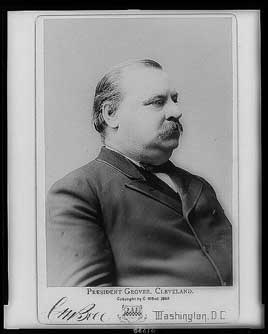
Grover Cleveland
The first president to serve two non-consecutive terms. A small-government Democrat, he vetoed more bills in his first term than all earlier presidents combined, signed the Interstate Commerce Act, and fought high tariffs. His second term began with the Panic of 1893. He had the Sherman Silver Purchase Act repealed, borrowed gold through J.P. Morgan to protect the dollar, and sent federal troops to break the Pullman strike.
The economy, first day to last
Shaded areas show the years in office, with a few years before and after for comparison. Budget years ran July to June until 1976 (now October to September), so each year's figures cover parts of two calendar years.
National debt
June 30, 1884 (end of fiscal 1884): $1.83 billion → June 30, 1888 (end of fiscal 1888): $1.69 billion · June 30, 1892 (end of fiscal 1892): $1.59 billion → June 30, 1896 (end of fiscal 1896): $1.77 billion
Daily debt figures don't exist before 1993, so Cleveland's numbers use the fiscal years closest to his terms, the same rule as every other page. The debt fell in his first term and rose in his second, when the government borrowed to rebuild its gold reserve.
Debt compared with the economy
Debt as a share of GDP. Above 100% means the debt is bigger than a year of everything the country produces.
Deficits and surpluses
Money borrowed each budget year (below the line) or paid down (above). The White House budget office's yearly figures begin in 1901.
Unemployment
1893: 11.7% → 1896: 14.5%. Yearly averages for his second term. National estimates by economist Stanley Lebergott begin in 1890, so none exist for his first term.
Inflation
How much prices rose each year (consumer price index).
Cost of living
What everyday prices and paychecks did while in office.
Prices use the consumer price index (MeasuringWorth). The minimum wage is the federal rate set by Congress.
Executive orders
253 orders. 113 in the first term and 140 in the second, as counted by the American Presidency Project.
Orders signed each year
Yearly counts aren't reliable for this era. Orders were not numbered until 1907, when the State Department numbered the ones already in its files, and many orders were never numbered at all, so only the total is shown.
Source: American Presidency Project: executive orders (full list of every order).
Notable orders
Most orders in this era were routine, such as setting aside public land or exempting jobs from civil service rules.
Every executive order we have 173Search, filter by topic or year, and open any order's full text
Incomplete: orders before 1929 were not numbered or collected consistently. This archive has 173 of the roughly 253 orders counted for this president.
- OrderMarch 18, 1885Executive Order
- OrderApril 25, 1885Executive Order
- OrderMay 12, 1885Executive Order
- OrderMay 26, 1885Executive Order
- OrderJune 2, 1885Executive Order
- OrderJune 15, 1885Executive Order
- OrderJuly 16, 1885Executive Order
- OrderJuly 23, 1885Executive Order
- OrderJuly 23, 1885Executive Order
- OrderJuly 23, 1885Executive Order
- OrderAugust 5, 1885Executive Order
- OrderAugust 6, 1885Executive Order
- OrderSeptember 23, 1885Executive Order
- OrderOctober 1, 1885Executive Order
- OrderOctober 1, 1885Executive Order
- OrderOctober 24, 1885Executive Order
- OrderOctober 29, 1885Executive Order
- OrderNovember 25, 1885Executive Order
- OrderNovember 25, 1885Executive Order
- OrderNovember 25, 1885Executive Order
- OrderNovember 27, 1885Executive Order
- OrderNovember 28, 1885Executive Order
- OrderDecember 12, 1885Executive Order
- OrderFebruary 9, 1886Executive Order
- OrderMarch 23, 1886Executive Order— Canceling Order of California Lands
- OrderApril 12, 1886Executive Order
- OrderApril 24, 1886Executive Order—Adding Land to Navajo Reservation
- OrderMay 4, 1886Executive Order—Establishment of Duck Valley Reservation Extension
- OrderMay 20, 1886Executive Order
- OrderJuly 3, 1886Executive Order
- OrderJuly 14, 1886Executive Order
- OrderAugust 13, 1886Executive Order
- OrderOctober 1, 1886Executive Order—Chehalis Land Returned Back to Indian Use
- OrderNovember 16, 1886Executive Order
- OrderNovember 18, 1886Executive Order
- OrderNovember 18, 1886Executive Order
- OrderNovember 20, 1886Executive Order
- OrderJanuary 4, 1887Executive Order
- OrderJanuary 15, 1887Executive Order
- OrderJanuary 29, 1887Executive Order—Allocation and Restoration of Lands in California
- OrderFebruary 11, 1887Executive Order—Land for Jicarilla Apache Indians
- OrderMarch 14, 1887Executive Order—Expansion of Coahuila Reservation
- OrderApril 22, 1887Executive Order
- OrderApril 30, 1887Executive Order
- OrderMay 5, 1887Executive Order
- OrderMay 9, 1887Executive Order
- OrderMay 24, 1887Executive Order—Approving Secretary of War Request on Wind River Reserve
- OrderMay 26, 1887Executive Order
- OrderMay 31, 1887Executive Order
- OrderJune 7, 1887Executive Order
- OrderJune 16, 1887Executive Order
- OrderAugust 25, 1887Executive Order
- OrderSeptember 1, 1887Executive Order—Approving Interior Order on Indian Territory in Utah
- OrderOctober 24, 1887Executive Order
- OrderFebruary 2, 1888Executive Order
- OrderMarch 1, 1888Executive Order
- OrderMarch 21, 1888Executive Order
- OrderMarch 23, 1888Executive Order
- OrderMay 26, 1888Executive Order
- OrderJune 5, 1888Executive Order
- OrderJune 18, 1888Executive Order
- OrderJuly 2, 1888Executive Order
- OrderJuly 2, 1888Executive Order
- OrderAugust 3, 1888Executive Order
- OrderAugust 9, 1888Executive Order
- OrderAugust 10, 1888Executive Order
- OrderAugust 14, 1888Executive Order
- OrderAugust 25, 1888Executive Order
- OrderOctober 17, 1888Executive Order
- OrderNovember 1, 1888Executive Order
- OrderNovember 1, 1888Executive Order
- OrderNovember 1, 1888Executive Order
- OrderNovember 1, 1888Executive Order
- OrderNovember 1, 1888Executive Order
- OrderNovember 1, 1888Executive Order
- OrderNovember 5, 1888Executive Order
- OrderNovember 13, 1888Executive Order
- OrderDecember 5, 1888Executive Order
- OrderDecember 6, 1888Executive Order
- OrderJanuary 4, 1889Executive Order
- OrderJanuary 4, 1889Executive Order
- OrderFebruary 11, 1889Executive Order
- OrderFebruary 11, 1889Executive Order
- OrderFebruary 11, 1889Executive Order
- OrderFebruary 19, 1889Executive Order—Defining Land for Quillehute Indians
- OrderFebruary 26, 1889Executive Order
- OrderApril 12, 1893Executive Order—Amendment of Civil Service Rules
- OrderMay 8, 1893Executive Order
- OrderMay 26, 1893Executive Order
- OrderJune 6, 1893Executive Order—Amendments of Civil Service Rules
- OrderJune 6, 1893Executive Order—Amendments of Civil Service Rules
- OrderJune 16, 1893Executive Order
- OrderAugust 19, 1893Executive Order—Amendments of Civil-Service Rules: United States Civil Service Commission
- OrderSeptember 11, 1893Executive Order—Creation of Hoh River Reserve
- OrderDecember 11, 1893Executive Order—Civil Service: Revocation of Promotion Regulations
- OrderJanuary 5, 1894Executive Order—Amendments of Civil Service Rules
- OrderJanuary 5, 1894Executive Order—Amendment of Civil Service Rules
- OrderJanuary 20, 1894Executive Order—Civil Service: Withdrawing Fish Culturists From the List of Places to Be Filled By Noncompetitive Examination
- OrderMarch 6, 1894Executive Order—Amendment of Civil Service Rules
- OrderMarch 20, 1894Executive Order—Amendment of Civil Service Rules
- OrderMay 1, 1894Executive Order—Amendment of Civil Service Rules
- OrderMay 11, 1894Executive Order—Civil Service: Amendment of Classification of the Indian Service As Made by the Secretary of the Interior, April 13, 1891
- OrderMay 11, 1894Executive Order—Amendments of Civil Service Rules
- OrderMay 26, 1894Executive Order
- OrderJune 21, 1894Executive Order—Amendment of Civil Service Rules
- OrderJune 21, 1894Executive Order—Amendment of Civil Service Rules
- OrderJuly 9, 1894Executive Order—Amendments of Civil Service Rules
- OrderJuly 25, 1894Executive Order—Civil Service: Amendment of Classification of the Department of Interior
- OrderNovember 2, 1894Executive Order—Civil Service: Amendment of Classification
- OrderNovember 2, 1894Executive Order—Civil Service: Amendment of Classification
- OrderNovember 2, 1894Executive Order—Amendments of Civil Service Rules
- OrderNovember 2, 1894Executive Order—Amendments of Civil Service Rules
- OrderNovember 2, 1894Executive Order—Amendments of Civil Service Rules
- OrderNovember 2, 1894Executive Order—Amendments of Civil Service Rules
- OrderNovember 2, 1894Executive Order—Amendments of Civil Service Rules
- OrderNovember 2, 1894Executive Order—Amendment of Civil Service Rules
- OrderNovember 2, 1894Executive Order—Amendment of Civil Service Rules
- OrderNovember 17, 1894Executive Order—Amendments of Civil Service Rules
- OrderDecember 4, 1894Executive Order—Amendment of Civil Service Rules
- OrderDecember 15, 1894Executive Order—Amendment of Civil Service Rules
- OrderJanuary 3, 1895Executive Order—Amendments of Civil Service Rules
- OrderFebruary 12, 1895Executive Order—Amendments of Civil Service Rules
- OrderMarch 2, 1895Executive Order—Amendments of Civil Service Rules
- OrderMarch 18, 1895Executive Order—Amendment of Civil Service Rules
- OrderMarch 20, 1895Executive Order
- OrderApril 15, 1895Executive Order—Amendment of Civil Service Rules
- OrderMay 7, 1895Executive Order—Civil Service: Internal Revenue Rules
- OrderMay 16, 1895Executive Order—Amendment of Civil Service Rules
- OrderMay 24, 1895Executive Order—Civil Service: Amendment of Classification
- OrderMay 24, 1895Executive Order—Amendments of Civil Service Rules
- OrderMay 24, 1895Executive Order—Amendment of Civil Service Rules
- OrderMay 24, 1895Executive Order—Amendment of Civil Service Rules
- OrderMay 24, 1895Executive Order
- OrderMay 28, 1895Executive Order
- OrderMay 28, 1895Executive Order
- OrderJune 9, 1895Executive Order—Canceling Cheyenne and Arapahoe Industrial School Reserve
- OrderJune 13, 1895Executive Order—Civil Service: Government Printing Office Rules
- OrderJune 25, 1895Executive Order—Civil Service: Withdrawing Engineers and Assistant Engineers From the List of Places to Be Filled by Noncompetitive Examination.
- OrderJuly 11, 1895Executive Order
- OrderJuly 15, 1895Executive Order—Civil Service: Classification of the Pension Agencies of the Interior Department
- OrderJuly 15, 1895Executive Order—Civil Service: Amendment of Classification
- OrderJuly 15, 1895Executive Order—Amendments of Civil Service Rules
- OrderJuly 15, 1895Executive Order—Amendments of Civil Service Rules
- OrderJuly 15, 1895Executive Order—Amendment of Civil Service Rules
- OrderJuly 15, 1895Executive Order—Amendment of Civil Service Rules
- OrderJuly 15, 1895Executive Order—Amendment of Civil Service Rules
- OrderJuly 30, 1895Executive Order—Amendment of Civil Service Rules
- OrderAugust 5, 1895Executive Order—Amendment of Civil Service Rules
- OrderAugust 16, 1895Executive Order—Civil Service: Withdrawing Compositors and Pressmen From the List of Places to Be Filled By Noncompetitive Examination
- OrderAugust 22, 1895Executive Order—Amendment of Civil Service Rules
- OrderSeptember 5, 1895Executive Order—Amendment of Civil Service Rules
- OrderSeptember 16, 1895Executive Order—Amendment of Civil Service Rules
- OrderSeptember 20, 1895Executive Order
- OrderSeptember 30, 1895Executive Order
- OrderNovember 6, 1895Executive Order—Amendment of Civil Service Rules
- OrderDecember 2, 1895Executive Order—Amendment of Civil Service Rules
- OrderDecember 2, 1895Executive Order—Amendment of Civil Service Rules
- OrderJanuary 18, 1896Executive Order—Amendment of Civil Service Rules
- OrderJanuary 18, 1896Executive Order—Amendment of Civil Service Rules
- OrderMarch 20, 1896Executive Order—Civil Service: Extension of the Classified Departmental and Indian Services
- OrderMarch 28, 1896Executive Order—Amendment of Civil Service Rules
- OrderMarch 28, 1896Executive Order—Amendment of Civil Service Rules
- OrderMay 6, 1896Executive Order—Civil Service Rules
- OrderMay 7, 1896Executive Order
- OrderMay 13, 1896Executive Order—Amendments of Civil Service Rules
- OrderNovember 2, 1896Executive Order—Amendments of Civil Service Rules
- OrderNovember 2, 1896Executive Order
- OrderDecember 23, 1896Executive Order—Amendment of Civil Service Rules
- OrderJanuary 2, 1897Executive Order—Amendment of Civil Service Rules
- OrderJanuary 2, 1897Executive Order—Amendment of Civil Service Rules
- OrderJanuary 12, 1897Executive Order—Civil Service: Classification of the Office of the President
- OrderJanuary 12, 1897Executive Order
- OrderJanuary 27, 1897Executive Order—Amendment of Civil Service Rules
Source: Executive Orders Archive, compiled from the American Presidency Project and the Federal Register. Topics are the archive's automated tags; "Revoked" and similar labels come from the Federal Register's records.
Pardons and commutations
A pardon wipes out the punishment for a federal crime; a commutation shortens a sentence but leaves the conviction. The Justice Department's published counts begin in 1900.
Granted each year
The Justice Department's published clemency counts begin in fiscal 1900, so there are no reliable yearly totals for this presidency.
Source: U.S. Dept. of Justice, clemency statistics, which lists every recipient with the crime and sentence.
Notable grants: tap to see the crime
Mormon polygamistsAmnestySeptember 25, 1894
The crime: Polygamy and 'unlawful cohabitation' under the Edmunds Act
Sentence: Various
Why it drew attention: Expanded Benjamin Harrison's 1893 amnesty, restoring civil rights to those who had obeyed the law since 1890.
SourceInvestigations and legal record
The same checklist for every president. Tap a row for details and sources.
ImpeachedNoNo
No articles of impeachment were voted on.
Criminally chargedNoNo
Never charged.
Aides or cabinet convictedNoNo
No member of his cabinet or White House staff was convicted.
Special counselsNoNo
None were appointed.
Misuse of DOJ, FBI or IRSDisputed — Pullman strikePartly
Attorney General Richard Olney, a former railroad lawyer who still sat on a railroad board, used a federal court injunction and troops against the 1894 Pullman strike. The Supreme Court upheld the injunction in 1895.
SourcePeople around the president who were charged or penalized
No one in the administration was charged or formally penalized.
Controversies and scandals
What happened, what was proven, and how it ended.
Maria Halpin's accusationAlleged1874; public in 1884
Cleveland acknowledged he might be the father of Halpin's son and paid support. Halpin later said he had forced himself on her; after she began drinking, the boy was placed in an orphanage and she was briefly committed to an asylum, arrangements Cleveland was involved in.
Outcome: The assault accusation was never tested in court. 'Ma, Ma, where's my Pa?' became a Republican chant in 1884.
SourceBreaking the Pullman strikeDisputed1894
Over the objection of Illinois's governor, Cleveland sent federal troops to Chicago to end a nationwide railroad strike, citing the mail. About 30 strikers were killed, and union leader Eugene Debs was jailed for violating an injunction.
Outcome: The Supreme Court upheld the injunction in In re Debs (1895).
SourceSecret cancer surgeryProvenJuly 1893
In the middle of a financial panic, surgeons removed a tumor from Cleveland's jaw on a friend's yacht in New York harbor. The White House denied a reporter's accurate story.
Outcome: Confirmed in 1917 by one of the surgeons.
SourceThe Morgan gold dealDisputed1895
To stop a run on the Treasury's gold, the government sold bonds to a syndicate led by J.P. Morgan and August Belmont on terms critics said handed them big profits.
Outcome: The gold reserve was saved; a Senate committee investigated the bond sales in 1896.
SourceIn their own words
Widely quoted remarks, with the context they were said in.
Though the people support the Government, the Government should not support the people.
Tell the truth.